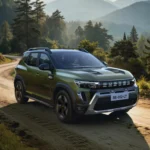
Highlights
- Claimed mileage of 29 kmpl, the highest for any Duster
- 1.8-litre four-cylinder hybrid engine with a 1.4kWh battery pack
- Priced Rs 50,000 to Rs 1 lakh above the petrol automatic
Renault has added a hybrid to the Duster line-up, and the company claims it returns 29 kmpl, the best figure the SUV has ever had. The earlier Duster was not known for fuel efficiency. This time the change comes from the powertrain, not from small tweaks. Here is a quick look at what the hybrid brings and what it gives up.
Also Read – Renault Duster Hybrid Mileage: Can It Win Buyers?
Powertrain
The Duster hybrid uses a 1.8-litre four-cylinder petrol engine with a 1.4kWh battery pack placed low in the car. Together they are what Renault credits for the mileage jump. The 29 kmpl figure is the company’s claim, so real-world numbers will vary with traffic and driving style. The hybrid comes only with an automatic gearbox. The car also has an E-Save button, whose exact function we will explain after driving it.

Ride And Boot Space
The hybrid gets frequency-dependent damping, a suspension feature meant to improve ride quality. Renault’s ride was already one of the Duster’s strengths, so this could make it better. We will confirm that on the road. The battery pack takes up some space, so boot space is slightly lower than in the petrol Duster. It was already the largest in the segment, so the loss should not matter much for most buyers.
Interior And Colours
The cabin gets new colour options. The upper variants have a brown theme, while the lower variant gets a beige scheme with leather and fabric upholstery.
Features Missing Compared To The Petrol
Compared with the top-spec Iconic petrol automatic, the hybrid misses out on:
- Electronic (digital) mirror
- ADAS
- 360-degree camera
- Side parking sensors (front sensors are still offered)
Price
Depending on the variant, the hybrid is priced Rs 50,000 to Rs 1 lakh above the equivalent petrol automatic. Most buyers will compare it against that car, since both are automatics.
Our Take
The hybrid’s strength is its claimed 29 kmpl, along with a smoother ride and a bigger focus on efficiency. The caveats are the lost features, especially ADAS and the 360-degree camera, and slightly less boot space. If low running costs matter most, the premium looks reasonable. If you want the full feature list, the top petrol may suit you better. We will share a full verdict after driving it.
What do you think of the Duster hybrid? Let us know in the comments below!