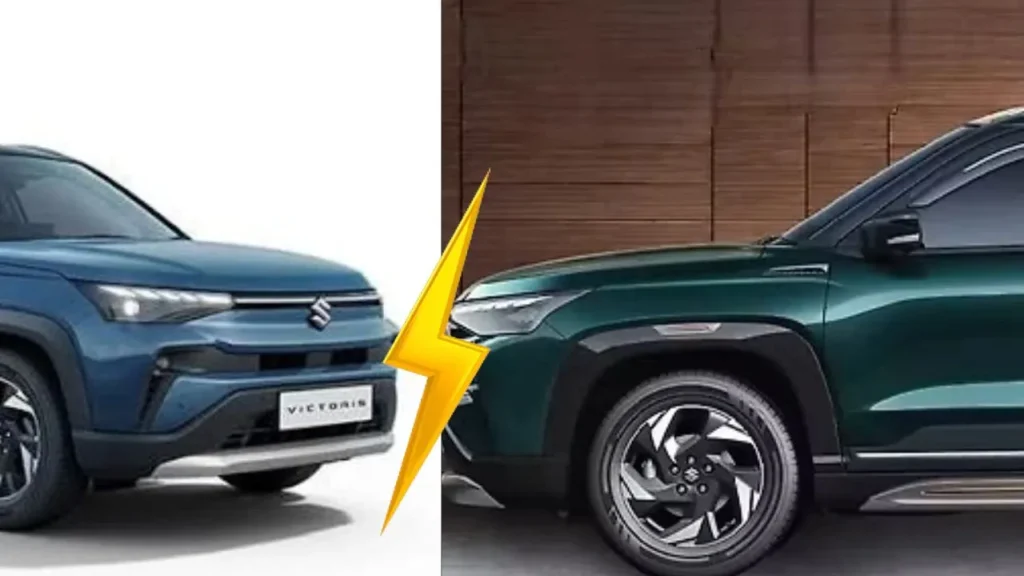
Maruti Victoris Aurum Edition vs Regular Hybrid: Is ₹22,990 Worth It?
The Aurum Edition is a kit of copper and chrome styling parts plus cabin protection. The strong-hybrid powertrain, features and safety kit stay exactly as they were.
Highlights
- Aurum Edition is an accessory pack at Rs 22,990, not a new variant
- Offered only on strong-hybrid Victoris models
- No change in engine, mileage, features or safety
Maruti Suzuki has marked the first anniversary of the Victoris with the Aurum Edition, a styling pack for the strong-hybrid versions. The kit costs Rs 22,990 and sits on top of the SUV’s price, which runs from Rs 16.43 lakh to Rs 19.99 lakh (ex-showroom) for the hybrid. The real question is whether the extras justify the money, or whether the regular hybrid already does the job.
What Does The Aurum Edition Add?
The Aurum Edition is a dealer-fitted accessory package. Maruti has not announced any new variant, new equipment or mechanical change. The pack has three parts:
- Copper accents: Skid plates at the front, sides and rear, along with the wheel arches, get grey and copper finishes.
- Chrome garnishes: The front grille, bumper upper garnishes, fenders, body side mouldings and rear bumper get chrome pieces. The door visors are chrome-finished too (reported as dark chrome in one source).
- Cabin protection: All-weather 3D floor mats, a 3D boot mat and a rear trunk sill guard.
Maruti has not published a variant-wise list. Since the pack is meant for hybrids, it is expected to fit the VXI, ZXI, ZXI Optional, ZXI Plus and ZXI Plus Optional hybrid trims. Confirm this with your dealer before booking.
Regular Strong Hybrid vs Aurum Edition
| Regular Victoris Strong Hybrid | Victoris Strong Hybrid + Aurum kit | |
|---|---|---|
| Skid plates and wheel arches | Standard finish | Grey and copper inserts |
| Grille, fenders, bumpers, side mouldings | Standard | Added chrome garnishes |
| Door visors | Optional accessory | Chrome-finished, in kit |
| Floor and boot mats | Optional accessory | 3D all-weather mats, 3D boot mat |
| Boot sill guard | Optional accessory | In kit |
| Engine and gearbox | 1.5-litre hybrid, e-CVT | Unchanged |
| Claimed mileage | 28.65 kmpl | 28.65 kmpl |
| Price | Rs 16.43 – 19.99 lakh (ex-showroom) | Same, plus Rs 22,990 for the kit |
Is Rs 22,990 Good Value?
The kit adds about 1.4 per cent to the price of the cheapest hybrid and about 1.1 per cent to the top one. On paper, that takes the hybrid range to roughly Rs 16.66 lakh to Rs 20.22 lakh. Maruti has not said whether fitting is included in the kit price.
The case for it:
- Practical items bundled in: Mats, a boot mat and a sill guard are things many owners buy anyway.
- Coordinated look: The copper and chrome pieces come as one matched set, which is harder to get by picking accessories one by one.
- Small outlay: The cost is modest next to a Rs 16 to 20 lakh purchase.
The case against it:
- No functional gain: Performance, mileage, features and safety are identical to the regular hybrid.
- Taste-dependent: Copper and chrome will not suit everyone, and chrome adds visual weight to an otherwise clean design.
- Accessory economics: If you only want mats and visors, buying them separately may cost less. Compare prices at your dealership.
What Stays The Same
Power still comes from a 1.5-litre three-cylinder petrol engine with an electric motor and a small battery. The combined output is around 116 PS, sent to the front wheels via an e-CVT automatic. Maruti claims an ARAI mileage of 28.65 kmpl.
The Victoris also keeps its safety credentials. It has scored 5 stars in both BNCAP and GNCAP crash tests, and the kit changes none of that. It continues to offer a 10.1-inch touchscreen, a panoramic sunroof, ventilated front seats, Level-2 ADAS and 6 airbags.
Anniversary And Sales Claims
The Victoris was launched in September 2025. Maruti claims it is the fastest-selling passenger vehicle in India to reach both 1 lakh and 1.5 lakh sales, and says it recorded the highest first-year sales of any new car in the country. It also won the Indian Car of the Year 2026 award. Bollywood actor Shahid Kapoor fronts the Aurum Edition campaign.
Our Take
The Aurum Edition is a well-timed, festive-season styling pack, and it is priced low enough to be an easy add-on. Its limit is that it changes only how the car looks and how well the floor is protected. Buyers who like the copper and chrome look, and would have bought mats and a boot mat anyway, will find reasonable value. Buyers who care about mileage, features or safety get the same car with or without the kit, so the money is better spent on a higher trim.
Rivals: Hyundai Creta, Kia Seltos, Maruti Grand Vitara, Toyota Urban Cruiser Hyryder, Honda Elevate, Tata Sierra, Skoda Kushaq and Volkswagen Taigun.
Would you add the Aurum kit to your Victoris hybrid? Let us know in the comments below!
Images are for representation only and may show the mild-hybrid model.
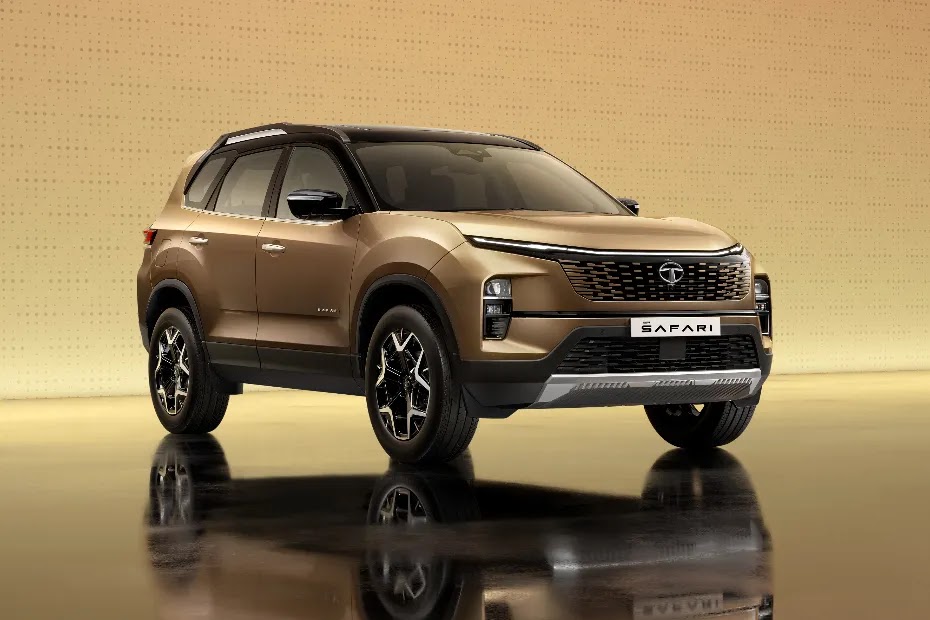
Tata Safari Facelift Booking Open Now
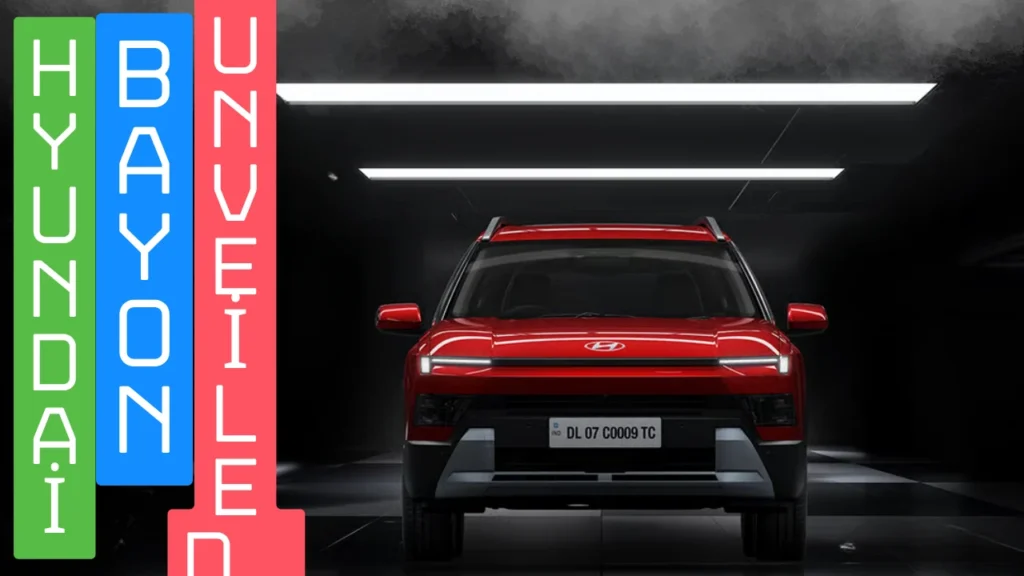
Hyundai Bayon Safety Kit: Level-2 ADAS, 360-Degree Camera And A Platform Built For Five Stars
- Level-2 ADAS and a 360-degree camera are visible in Hyundai’s images
- The platform is reportedly engineered to meet five-star Bharat NCAP standards
- No crash-test result yet
Also Read – https://autonote.in/hyundai-bayon-bookings-open-at-rs-11000/
Also Read – https://autonote.in/2026-hyundai-bayon-interior-and-features-what-is-confirmed-and-what-is-still-expected/
Also Read – https://autonote.in/2026-hyundai-bayon-unveiled-in-india-dual-screens/
Hyundai has put technology at the centre of the Bayon’s pitch, but the safety package matters just as much for family buyers. The company has not yet released a full safety list, so this piece separates what the unveil images show from what we expect.
Seen In The Unveil Images
- Front and rear parking sensors
- A 360-degree camera with multiple view angles
- Electronic parking brake with auto-hold
- Level-2 ADAS
Expected, Not Yet Confirmed
- Six airbags as standard
- Electronic stability control (ESC)
- Hill-hold assist
- Tyre pressure monitoring system (TPMS)
- ISOFIX child-seat mounts
- Blind-spot monitoring, tied to the 360-degree camera
Reports on the ADAS suite suggest adaptive cruise control, automatic emergency braking, lane-keep assist, blind-spot detection and automatic high beam. Hyundai has not published the function list, and it is also unclear which variants will get it.
Platform And Crash Safety
According to reports from Hyundai’s briefing, the Bayon uses the Global K Enhanced Platform, engineered to meet five-star Bharat NCAP standards. That is a design target, not a rating. The car has not been tested, so no star rating can be quoted yet.
OTA Updates And Safety
Hyundai says over-the-air updates for up to 19 controllers will help with safety and security, along with remote enhancements that need no dealership visit. The company adds that availability of updates is at its discretion and connected features depend on network coverage.
Our Take
On paper the safety list is competitive with the Creta. The real test will be which items come as standard and which are limited to top variants. Buyers should wait for the variant-wise list on October 26, and for an independent crash-test result, before assuming a five-star outcome.
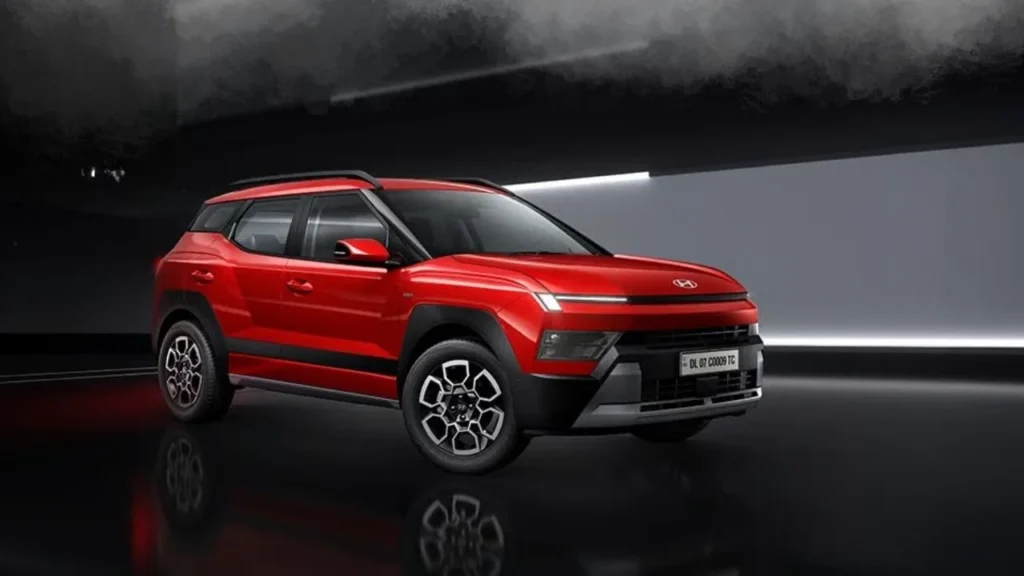
Hyundai Bayon bookings open at Rs 11,000; launch on October 26
Also Read – 2026 Hyundai Bayon Unveiled In India: Dual 12.3-Inch Screens, Generative AI And A Single 1.5-Litre Petrol
Also Read – https://autonote.in/2026-hyundai-bayon-interior-and-features-what-is-confirmed-and-what-is-still-expected/
Also Read – https://autonote.in/2026-hyundai-bayon-unveiled-in-india-dual-screens/
Also Read – https://autonote.in/hyundai-bayon-bookings-open-at-rs-11000/
Hyundai’s new crossover will be priced on launch day, with the 1.5-litre petrol engine the only powertrain on offer.
Highlights
- Bookings open at Rs 11,000
- Launch and prices on October 26, 2026
- Single 115 PS petrol, 6MT or IVT
Hyundai Motor India has opened bookings for the Bayon at a token amount of Rs 11,000, with the official launch and price announcement scheduled for October 26, 2026. Customers can reserve one on Hyundai’s website or at any authorised dealership.
The company unveiled the India-spec Bayon on October 12. It will sit between the Venue and the Creta, and Hyundai is pitching it as an “Intelligent Utility Vehicle” built around connected technology. Variant names, colours and prices are yet to be announced.
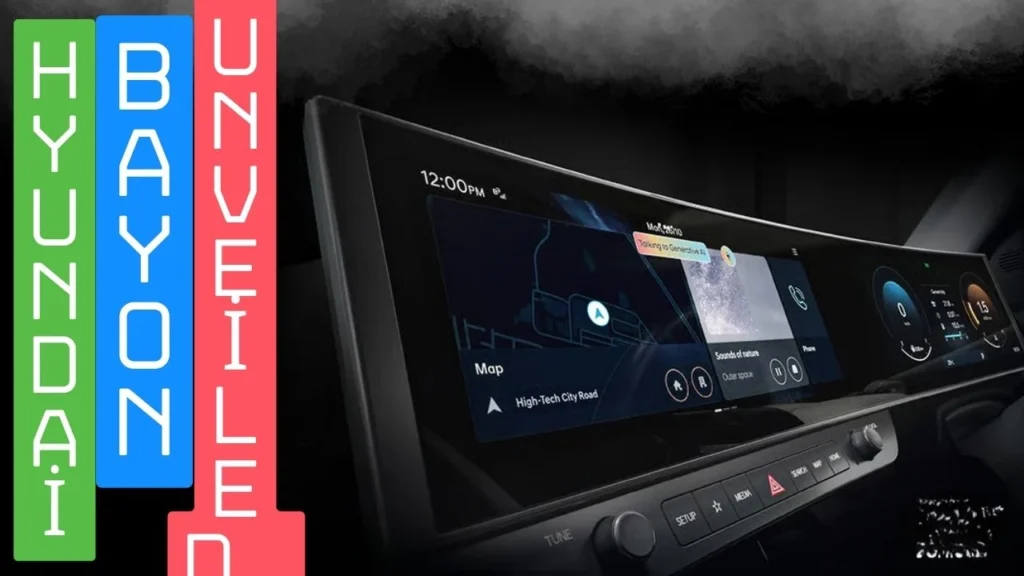
The headline features are two 12.3-inch screens on a curved panel, a generative AI voice assistant, over-the-air updates and the Bluelink connected-car suite. Images also show a 360-degree camera, parking sensors and Level-2 ADAS.
There is only one engine: a 1.5-litre four-cylinder petrol making 115 PS and 144 Nm. It comes with a six-speed manual or an IVT automatic. Hyundai has not announced a diesel, turbo-petrol or CNG version.
Deliveries are planned for the festive season. Hyundai has not given dates, and says timelines will be shared at launch. Reports suggest the car could be in homes before Diwali, but that remains unconfirmed.
Prices are expected to start at around Rs 10 lakh (ex-showroom). The Bayon will rival the Kia Seltos, Skoda Kushaq, Volkswagen Taigun, Maruti Grand Vitara and Victoris, Honda Elevate, MG Astor and Renault Duster, among others.
2026 Hyundai Bayon Unveiled In India: Dual 12.3-Inch Screens, Generative AI And A Single 1.5-Litre Petrol
Hyundai Motor India has taken the wraps off the Bayon, a new crossover that will sit between the Venue and the Creta in its SUV line-up. The Bayon goes on sale on October 26, 2026, when prices and variants will be announced. Bookings are already open for Rs 11,000. Here is everything revealed so far.
Price And Launch Details –
- Launch date: October 26, 2026
- Booking amount: Rs 11,000, online at hyundai.co.in or at any Hyundai dealership
- Expected price: around Rs 10 lakh to Rs 15 lakh (ex-showroom), though some estimates stretch to Rs 18 lakh for the top variant. Hyundai has not given any figure yet
- Deliveries: during the festive season. Hyundai says detailed timelines will come at launch
Design
- Front: slim LED DRLs sit at the top of the face, joined visually by a black strip rather than a continuous light bar. The headlamps are mounted below them, and a silver-finished skid plate sits on the bumper.
- Side: a sculpted bonnet, squared-off wheel arches, thick black cladding and geometric 17-inch dual-tone alloy wheels give it an upright, rugged stance. Bridge-type roof rails and a shark-fin antenna complete the profile.
- Rear: the tail-lamps are slim LED units that echo the front lighting, and the tailgate carries spaced-out BAYON lettering. A roof-mounted spoiler and a second silver skid plate round off the rear.
Hyundai has not revealed the colour palette yet.
Also Read – https://autonote.in/hyundai-bayon-bookings-open-at-rs-11000/
Interior
The cabin follows the layout of the global-spec i20. A single curved panel holds two 12.3-inch displays, one for the infotainment system and one for the instrument cluster. The AC vents are slim and vertical, with the climate controls placed between them. Physical shortcut buttons and rotary controls sit below the screens, and the four-spoke steering wheel is the same unit used on the Venue and Verna.
Features And Safety
- Dual 12.3-inch curved displays
- Hyundai’s first generative AI voice assistant, built on Perplexity’s intelligence and SoundHound AI’s voice technology
- NVIDIA-accelerated Connected Car Navigation Cockpit (ccNC)
- Over-the-air updates for up to 19 controllers
- Bluelink with more than 70 connected features
- Ventilated front seats, Bose sound system, wireless phone charger, Type-C USB ports (as seen in the unveil images and reports)
- Front and rear parking sensors, 360-degree camera, electronic parking brake with auto-hold and Level-2 ADAS (as seen in the unveil images)
Six airbags, ESC and TPMS are expected as standard but are not officially confirmed.
Powertrain Options
| Engine | 1.5-litre four-cylinder MPi petrol |
|---|---|
| Power | 115 PS |
| Torque | 144 Nm |
| Transmission | 6-speed MT / IVT |
| Drivetrain | FWD |
MT – Manual Transmission, IVT – Intelligent Variable Transmission (Hyundai’s automatic, a type of CVT), FWD – Front-Wheel Drive
This is the same naturally aspirated engine that powers the Creta. There is no diesel or turbo-petrol option at launch.
Rivals
The Bayon will take on the Kia Seltos, Skoda Kushaq, Volkswagen Taigun, Honda Elevate, MG Astor, Renault Duster, Maruti Victoris, Maruti Grand Vitara, Toyota Urban Cruiser Hyryder, Tata Sierra, Nissan Tekton and Citroen Aircross X. It will also sit alongside the Creta in Hyundai’s own showroom.
Our Take –
The Bayon gives Hyundai a younger, more offbeat product in a segment where the Creta has long set the benchmark. The screens, the AI assistant and the connected-car package are strong selling points, and its position below the Creta suggests sharp pricing. The caveat is the single petrol engine, which rules out buyers who want a turbo-petrol, diesel or CNG option. Everything now depends on the price on October 26.
What do you think of the Bayon? Let us know in the comments below!
2026 Honda Elevate Facelift Launched At Rs 11.80 Lakh: Sharper Looks, Ventilated Seats & Level-2 ADAS
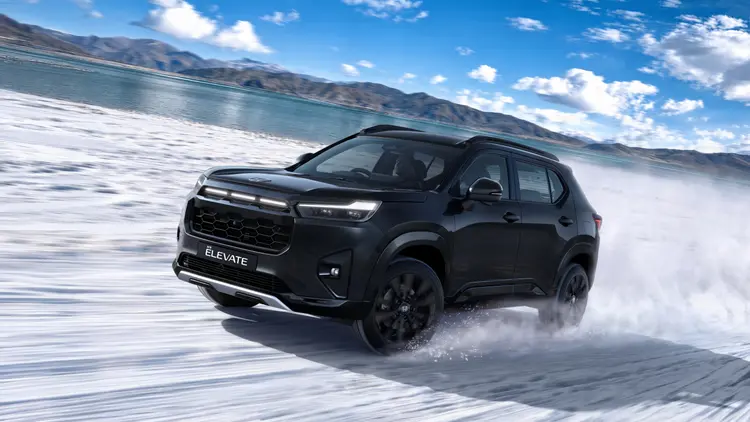
Honda Cars India launched the Elevate facelift on October 6, 2026, with prices starting at Rs 11.80 lakh (ex-showroom). This is the SUV’s first major update since its debut in 2023. It brings a redesigned front end, a longer features list and a new top trim, while the 1.5-litre petrol engine carries over unchanged. Here is everything you need to know.
Price & Variants –
The Elevate facelift is sold in six trims: SV, V, VX, ZX, ZX+ and ZX+ Black. The base SV comes only with a manual gearbox, and the other trims offer a choice of manual or CVT.
| Powertrain | Trims | Price (ex-showroom) |
|---|---|---|
| 1.5-litre petrol MT | SV, V, VX, ZX, ZX+ | Rs 11.80 lakh – Rs 16.90 lakh |
| 1.5-litre petrol CVT | V, VX, ZX, ZX+ | Rs 13.79 lakh – Rs 18.40 lakh |
ZX+ is also offered as the ZX+ Black. MT – Manual Transmission, CVT – Continuously Variable Transmission.
- The range starts at Rs 11.80 lakh and tops out at Rs 18.40 lakh, ex-showroom.
- ZX+ is the new top trim, and it gets the most of the new equipment.
- Only one engine is on offer, so the real choice is manual versus CVT.
Design –
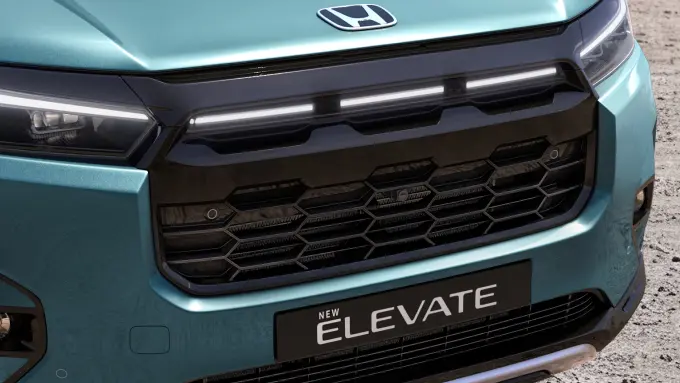
The Elevate keeps its boxy, upright silhouette, but the face is new.
- Front: a new honeycomb-pattern grille, a three-piece LED light bar above it, and revised LED lighting elements.
- Side: largely unchanged, with roof rails, body cladding, a shark-fin antenna and 17-inch alloy wheels.
- Rear: connected LED tail-lamps and a redesigned bumper.
The changes are subtle, but they bring the Elevate closer to Honda’s current design language.
Interior
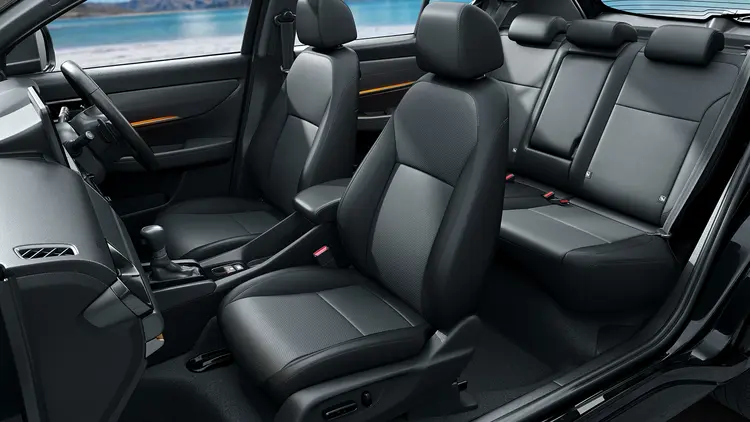
The cabin layout is familiar, with a dual-tone theme, leatherette upholstery and a central touchscreen, but Honda has lightened the mood with a new ivory-and-black treatment. Rear-seat space and the airy feel, thanks to large windows, remain selling points.
The ZX+ gets powered front seats: an eight-way adjustable driver’s seat and a four-way adjustable passenger seat.
Features & Safety
New or upgraded
- Ventilated front seats, on ZX and above.
- Ventilated rear seats, on ZX+. Honda is positioning this as a segment-first feature.
- 360-degree camera on the ZX+, replacing the multi-angle rear camera of the old model.
- Ambient lighting, capacitive-touch LED cabin lights, Type-C charging ports and an air purifier.
- An updated audio system on the top variants.
Carried over
- 10.1-inch touchscreen with wireless Android Auto and Apple CarPlay.
- 7-inch digital driver’s display and a single-pane sunroof.
- 8-speaker sound system and wireless phone charger.
- Automatic climate control, keyless entry and push-button start.
- Connected-car tech.
Safety
- Six airbags across the range.
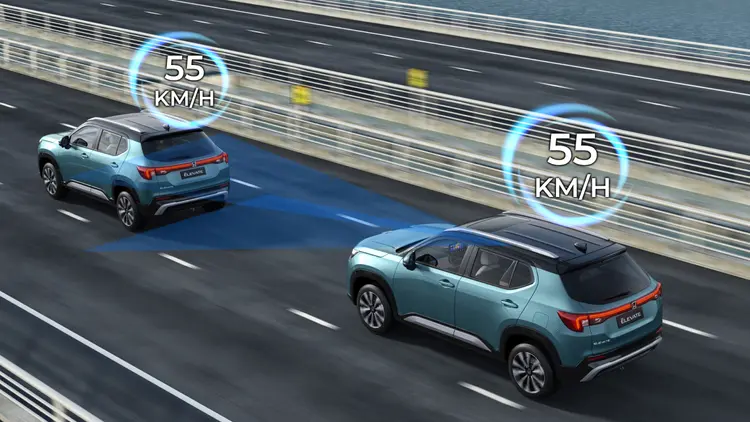
- Honda Sensing ADAS (adaptive cruise control, collision mitigation braking, lane-keeping assist and road-departure mitigation).
- Electronic parking brake with auto-hold, TPMS and ISOFIX anchorages.
- CVT variants get rear disc brakes.
Powertrain & Mileage
| 1.5-litre naturally aspirated petrol | |
|---|---|
| Power | 121PS |
| Torque | 145Nm |
| Transmission | 6-speed MT / 7-step CVT |
| Claimed mileage | 15.31kmpl (MT), 16.61kmpl (CVT) |
The engine is unchanged. The claimed mileage of the manual stays the same, but the CVT figure is 0.31kmpl lower than the old model’s claimed 16.92kmpl.
On-Road Prices
On-road prices (indicative) for the Elevate facelift in major cities, in Rs lakh:
| Variant | Delhi | Mumbai | Bengaluru | Chandigarh |
|---|---|---|---|---|
| SV MT | 13.69 | 13.93 | 14.52 | 13.22 |
| V MT | 14.26 | 14.51 | 15.12 | 13.77 |
| V CVT | 16.00 | 16.28 | 16.97 | 15.45 |
| VX MT | 16.16 | 16.44 | 17.14 | 15.61 |
| VX CVT | 17.86 | 18.17 | 18.94 | 17.24 |
| ZX MT | 17.86 | 18.17 | 18.94 | 17.24 |
| ZX CVT | 19.60 | 19.94 | 20.78 | 18.92 |
| ZX+ MT | 19.49 | 19.83 | 20.67 | 18.82 |
| ZX+ CVT | 21.23 | 21.60 | 22.52 | 20.50 |
Kolkata prices are identical to Delhi. Chandigarh is the cheapest of the cities and Bengaluru the costliest. The base SV MT is Rs 1.30 lakh cheaper in Chandigarh than in Bengaluru, and the gap on the top ZX+ CVT is Rs 2.02 lakh. Insurance, registration and FASTag charges vary by city, so confirm the exact figure with your dealer.
EMI: What Will The Base Elevate Cost Per Month?
These figures assume the SV’s Rs 11.80 lakh ex-showroom price, a 10 per cent down payment of Rs 1.18 lakh, a loan of Rs 10.62 lakh and a 9.8 per cent interest rate.
| Tenure | Monthly EMI | Total payable (loan) |
|---|---|---|
| 3 years | Rs 34,168 | Rs 12,30,048 |
| 4 years | Rs 26,833 | Rs 12,87,984 |
| 5 years | Rs 22,460 | Rs 13,47,600 |
| 6 years | Rs 19,567 | Rs 14,08,824 |
| 7 years | Rs 17,521 | Rs 14,71,764 |
Stretching the loan from three to seven years cuts the EMI by about Rs 16,650 a month, but adds roughly Rs 2.42 lakh to the total you repay. These numbers are indicative, and the actual EMI depends on your credit score, the lender’s rate, the tenure and other charges.
Booking & Delivery
Pre-bookings opened a few weeks before launch. You can now book online through Honda’s website by choosing the transmission, variant and colour, picking a dealership and paying a booking amount of Rs 21,000. You can also book at a showroom. Honda says deliveries have already begun, though a short wait is possible during the festive season, and it may vary by variant, colour and city.
Rivals
The Elevate competes with the Hyundai Creta, Kia Seltos, Renault Duster, Skoda Kushaq, Volkswagen Taigun, Maruti Victoris, Maruti Grand Vitara, Toyota Urban Cruiser Hyryder, Nissan Tekton, Tata Sierra and MG Astor.
Our Take
The facelift answers the old Elevate’s biggest feature gaps. Ventilated seats, a 360-degree camera and powered front seats make it feel far more current, and the Rs 11.80 lakh starting price keeps the entry point attractive. The catch is that the best features sit on the ZX and ZX+ trims, which cost much more, and the engine is unchanged. There is also no hybrid option, even though the Grand Vitara and Hyryder offer one and Honda’s own City has e:HEV. Honda has ruled out a hybrid Elevate and is working on an electric SUV, the Alpha 0, for launch by the end of this financial year. If you want the features, look at ZX or above, and take a test drive of both the MT and CVT before booking.
What do you think of the new Elevate facelift? Let us know in the comments below!