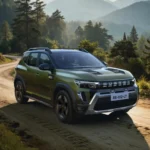
Key points
- Renault claims 29 kmpl for the Duster Hybrid, the highest certified figure among Indian passenger cars, at Rs 16.99 lakh to Rs 19.49 lakh (ex-showroom).
- Real-world tests have returned anywhere from about 15 kmpl to 21 kmpl, so the result depends heavily on how and where you drive.
Renault India needs the Duster Hybrid to work. The new Duster has struggled since its launch, with only 465 units sold in September, against 12,569 for the Kia Seltos in the same month. The hybrid, priced from Rs 16.99 lakh (ex-showroom), is Renault’s attempt to give mileage-focused buyers a reason to come back. But can it actually do that?

What does Renault offer on paper?
The Duster Hybrid is sold in three trims: Evolution, Techno and Emotion. Prices run up to Rs 19.49 lakh (ex-showroom) for the top Emotion trim.
| Detail | Duster Hybrid (E-Tech 160) |
|---|---|
| Price | Rs 16.99 lakh to Rs 19.49 lakh (ex-showroom) |
| Engine | 1.8-litre four-cylinder naturally aspirated petrol |
| Engine output | Around 109bhp |
| Electric motor | 49bhp traction motor, up to 208Nm |
| Combined output | Around 158bhp (hence the “160” in E-Tech 160) |
| Battery | 1.4kWh |
| Gearbox | Multi-mode automatic (4 gears for the engine, 2 for the motor) |
| Claimed mileage | 29kmpl (ARAI) |
| Claimed 0-100kmph | Around 9.6 seconds |
| Fuel tank | 50 litres |
Renault also claims up to 80 per cent of city driving can be done in EV mode, and a range of over 1,400km on a full tank. All of these are brand claims.
Why does the hybrid system matter for mileage?
The Maruti Suzuki Victoris, Toyota Urban Cruiser Hyryder and Maruti Suzuki Grand Vitara all use a 1.5-litre three-cylinder engine with an e-CVT. The Duster uses a larger engine and a battery roughly twice the size of theirs. It also has a dog-clutch gearbox, which Renault describes as Formula 1-inspired.
The larger battery lets the Duster stay in EV mode for longer. In the city, our drives showed it can pass 50kmph on electric power alone. The petrol engine mostly steps in when the battery runs low or when you ask for more power. The system also behaves less like an e-CVT, which means less of the rubber-band effect under hard acceleration.
How does the claimed mileage hold up in the real world?
This is where the claim gets tested, and the results vary a lot:
- Tank-to-tank test, Chennai: 122km covered on 7.92 litres, which works out to about 15.4kmpl, with Eco and E-Save modes left off. Renault later pointed to a low battery charge at the start of the run.
- Media drive, Chennai: around 21.3kmpl over roughly 160km, with enthusiastic driving.
- Hard driving: figures of 11-12kmpl in performance runs, and about 13.9kmpl in a drive with a lot of idling.
- City driving: around 18-20kmpl, with regenerative braking helping in stop-and-go traffic.
The gap between claim and reality is large, but it is normal for self-charging hybrids. These figures also come from short drives with varying traffic, charge levels and driving styles. We need longer ownership reports before giving a firm real-world number. If you drive mostly in traffic, the Duster Hybrid looks capable of returning close to 20kmpl. On the highway, expect lower figures.
Is it a real diesel replacement?
Renault is marketing it that way, and the “Forget Diesel, Think Hybrid” messaging was everywhere at the Chennai drive. For slow city commutes it makes sense. It is quiet, smooth and cheap to run, and it gives away less boot space than a CNG car does. If you do a lot of fast highway driving, a diesel still deserves a look, and the hybrid’s efficiency will fall there.
Where does the Duster Hybrid fall short?
Renault has kept the price low by cutting equipment. Compared with the top turbo-petrol Duster, the hybrid misses out on:
- Level 2 ADAS
- A 360-degree camera
- An auto-dimming interior mirror
- Driver’s seat lumbar support (and, per one report, rain-sensing wipers)
There are also practical trade-offs. Boot space drops from 518 litres to 372 litres because the battery sits under the floor, and there is no spare wheel as standard, only a puncture repair kit. A space-saver spare is sold as an accessory. Some testers also found the rear camera quality weak, and the engine can get noisy when the generator recharges the battery. The top hybrid costs about the same as the top turbo-petrol DCT, so some buyers will weigh features against fuel savings. Renault says ADAS could be considered if customers ask for it.
Can it beat the Victoris and Hyryder?
It is priced in the same band as the Victoris and Hyryder, and the claimed 29kmpl is about 1kmpl more than their claims. The Duster also has more power and a more engaging drive. Reviewers praised its ride quality, high-speed stability and refinement.
The problem is the market. Strong hybrids made up only about 2.2 per cent of passenger vehicle sales in the first half of this financial year, while EVs now account for more than six per cent. Rivals also offer more features and have stronger dealer networks. Another concern is resale value, which remains unproven for a new hybrid from Renault.
Our Take
The Duster Hybrid is the most sophisticated and best-driving strong hybrid in its price range, and its city mileage is strong. But it will not suit everyone. If you want the best driving experience and a diesel-like feel with city efficiency, it deserves a test drive. If you want the most features or the biggest boot, rivals may suit you better. Whether it can win over mileage-focused buyers will depend on real-world ownership figures and on how Renault handles its feature gaps and its dealer network.
What do you think of the Duster Hybrid? Let us know in the comments below!