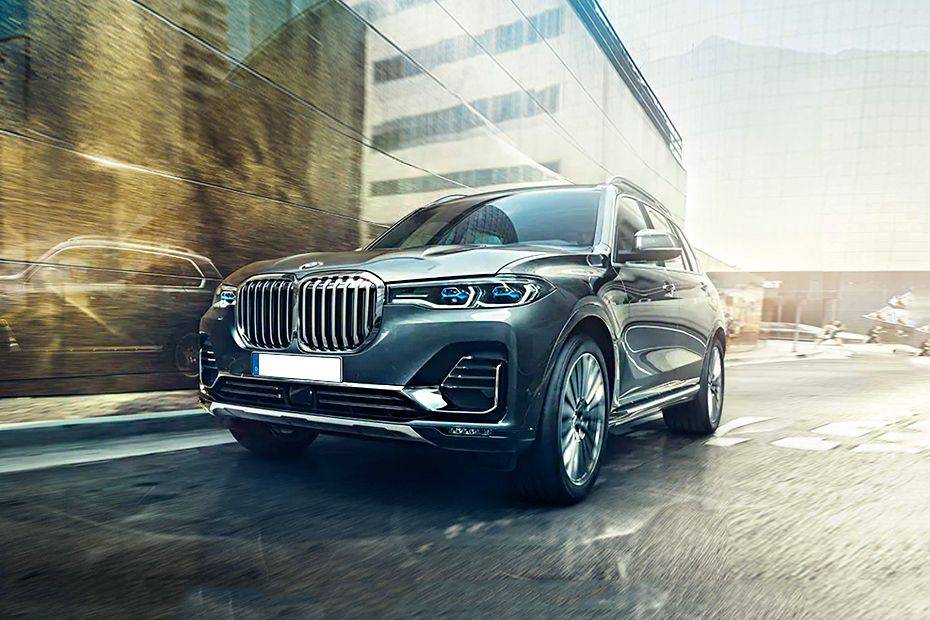
The Nissan Kicks is longer than any other compact SUV or crossover in India—larger than the Creta—and is also quite feature-rich. It comes with a tried-and-tested diesel engine and underpinnings that have impressed us in the past with their ride quality. So, there is already a lot that makes the Kicks a superior product. Let’s dive into the details and find out whether this compact crossover is worth your money.

Despite being one of the largest cars in its segment, the Kicks doesn’t feel big, nor does the cabin seem particularly spacious. There are also some ergonomic issues that might bother certain drivers, and it isn’t the best-equipped car either; features like an auto-dimming IRVM and a sunroof are missing—both of which would have significantly enhanced its appeal. And then, of course, there is the absence of an automatic transmission.
Considering both the pros and cons, we conclude that the Kicks is a car for those seeking a stylish compact SUV. It appeals to individuals who value quality and are either buying a second, relatively compact car for the family or looking to upgrade their driving experience from a standard sub-compact vehicle. With an expected price range of ₹10–15 lakh, the Kicks could appeal to a wide range of buyers, as the pricing factor is likely to play a significant role.
Nissan Kicks Exterior –
The Kicks features a distinctive design that will appeal to those who want their car to stand out from the crowd. It is available in dual-tone exterior color schemes, featuring shades that are vibrant and youthful.
It is equipped with LED headlamps and position lamps, which lend it a modern look. The front end appears wide—particularly the headlamps, bonnet, and fog lamps—and the Nissan V-Motion grille adds a bold touch. The rear, with its boomerang-shaped tail lamps, features a design unlike anything else seen on Indian roads.
In terms of size—at least on paper—the Kicks does not fall short; generally speaking, it is longer and wider than the Creta. Let’s be clear: the Nissan Kicks is not an SUV in the traditional sense. It features a long footprint with raked A-pillars and significant overhangs, giving it the appearance of a crossover. There is black plastic cladding along the lower sections all around—a design element borrowed from SUVs, yet also seen on cross-hatches.
However, the Kicks delivers on a key SUV attribute: height. Its 210mm ground clearance and 17-inch wheels give it a purposeful stance. So, if you define road presence through distinctive design, the Kicks is a car worth waiting for. But if commanding road presence is your top priority, the Kicks might not quite hit the mark for you, despite being taller and wider than its rivals.
Nissan Kicks Interior –
Premium would be that one word to best describe the interior of the Kicks. The black-brown interior color scheme looks elegant to start with. The brown panels on the dashboard and on the doors are done in leather, while the black plastic on top of the dashboard isn’t exactly soft-touch, but feels upmarket. The steering and seats also have a leather finish, giving the cabin a rich feel. The luxuriousness of the cabin is further enhanced by good noise insulation. The diesel engine clatter inside the cabin of the Kicks is much quieter than its siblings.
Apart from those who appreciate quality, the Kicks will also appeal to those who love the interior of their car, in other words, the Kicks feels quite compact inside, good for those who don’t want to be intimidated by the dimensions while driving, but disappointing for those who don’t like a spacious cabin. Blame it on the dark (black) color scheme.
For instance, even in its lowest setting, the driver’s seat is positioned rather high—an issue it shares with its platform sibling, the Captur. Taller individuals (over 5’8″) will particularly feel like they are sitting too high up. You can slide the seat back and tilt the steering wheel down to find a decent driving position, but doing so moves you further away from the wheel—and unfortunately, there is no telescopic adjustment.
And that’s not all; even if you manage to reach the steering wheel, you still have to contend with another ergonomic issue: the cramped footwell. There isn’t enough space to rest your foot on the floor to the left of the clutch pedal; instead, you are forced to tuck your foot away and place it on the floor beneath the clutch! Taller drivers: don’t forget to take a test drive before signing on the dotted line. Also, there is no light for the passenger-side vanity mirror.
Its sloping roofline might lead you to believe that rear headroom is compromised, but that isn’t the case. There is ample headroom and legroom for adults, though the space does feel quite compact. The rear windows are large for a crossover with a sloping roof, offering an expansive view outside. Seating three adults in the back might be a tight squeeze, but two adults and a child should be comfortable. There is a small, fixed headrest for a child in the middle seat, and the rear AC vents are ergonomically positioned so they don’t eat into legroom. That said, the Kicks feels like a car for those who drive themselves or have families with growing children, rather than for those who are primarily chauffeured around.
Nissan Kicks Performance –
The Kicks is powered by the same powertrain setup as the Captur. It gets 1.5-litre petrol and diesel engines. The diesel engine—which we drove—is paired with a 6-speed manual transmission, while the petrol engine comes with a 5-speed manual.
On paper, the diesel engine produces a maximum power of 110PS. Although it isn’t the most powerful engine in its segment, it never felt out of breath, even at triple-digit speeds. Cruising at highway speeds should be an easy task for the Kicks.
However, downshifting will be required for overtaking or quick acceleration. The diesel engine generates a peak torque of 240Nm at 1750rpm, but you only make rapid progress once the rev counter climbs past 2500rpm. You will also need to adjust your driving style when driving in the city. So, as the engine continues to rev beyond 1,500 rpm, you will need to upshift to maintain momentum. The Kicks’ diesel powertrain comes with an ‘Eco’ mode that softens throttle response, making it 1.5 kmpl more efficient in our city mileage test.
While the Kicks may look sporty and agile on the outside, its ride quality is tuned for absolute comfort. The suspension effortlessly absorbs undulations—whether small or large—at both low and high speeds. Despite the softer setup, the Kicks doesn’t toss its passengers around when traversing uneven surfaces. This comfortable ride enhances the cabin’s premium feel, giving the overall package a level of sophistication comparable to cars from a segment above.
Nissan Kicks Safety –
Nissan has not fully disclosed the feature set or variant details of the Kicks yet; however, we know that the top-end variant will be available only with the diesel engine, not the petrol. In terms of safety, the top-spec Kicks comes equipped with ABS with EBD, Brake Assist, Hill Start Assist, and four airbags. For comparison, the Creta offers six airbags, while the S-Cross gets only two.
The 360-degree parking assist is a standout feature and is exclusive to the Kicks within the compact SUV and crossover segment. It utilizes four cameras—one at the front, one at the rear, and one beneath each ORVM—to provide an all-around view of the car while maneuvering into a parking spot.
Additionally, the Kicks features LED headlamps and DRLs, 17-inch alloy wheels, automatic climate control (standard), a cooled glovebox, cruise control, fog lamps with a cornering function, and an 8-inch touchscreen infotainment system with Apple CarPlay and Android Auto compatibility. It also includes rain-sensing wipers.
The 8-inch touchscreen on the dashboard appears wide; however, it is not angled towards the driver, making it somewhat difficult to operate while driving.
Compared to the top-spec Creta, the Kicks misses out on convenience features such as an auto-dimming IRVM, a power-adjustable driver’s seat, and a wireless charger. Unlike the Creta, it also lacks a sunroof—a feature that would have complemented the Kicks’ youthful vibe. On the other hand, the Creta does not offer the LED headlamps and 360-degree parking assist that the Kicks provides.