Introduction
One of the most critical specifications for any car buyer in India is ground clearance. It can be the difference between a smooth drive and a heartbreaking thud against a poorly designed speed breaker.
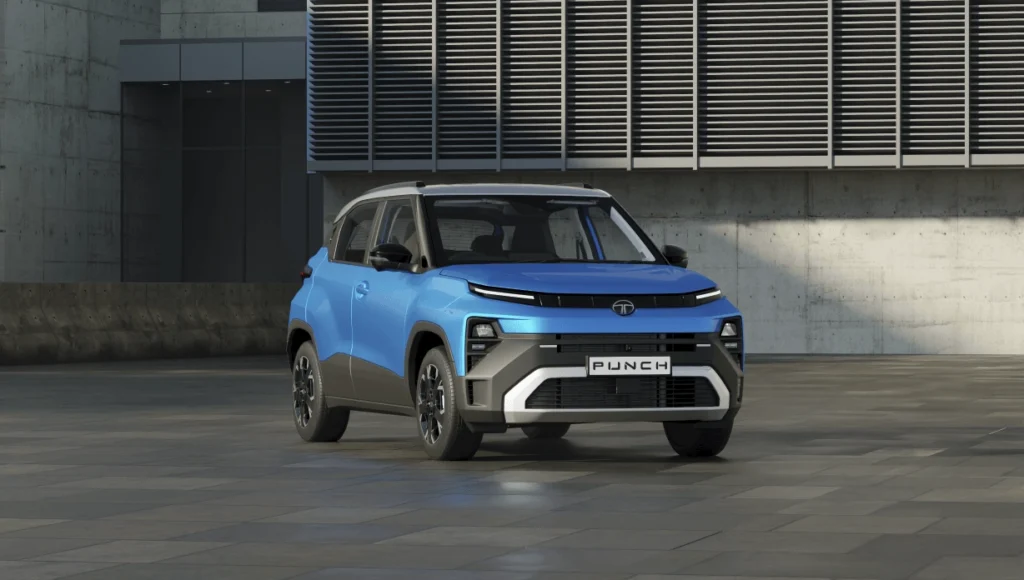
For those in the market for a compact SUV that delivers peace of mind, the Tata Punch stands out as a segment leader. But does its SUV-inspired design translate into real-world practicality? Let’s dive deep into the Tata Punch ground clearance and see why it is a game-changer for navigating the challenges of Indian roads.
What is the Ground Clearance of the Tata Punch?
If you are looking for a hard number, the Tata Punch ground clearance is 193 mm. This figure applies to the latest 2026 model year. It is important to note that earlier versions of the Punch (from 2021 onwards) boasted an already impressive 187 mm ground clearance.
The 2026 Upgrade: A 6mm Difference That Matters
In 2026, Tata Motors raised the stakes by increasing the Punch’s ground clearance from 187 mm to 193 mm. While a 6 mm increase might seem marginal on paper, it significantly enhances real-world usability, particularly when the car is fully loaded with passengers and luggage. This update reinforces the Punch’s position as a rugged, durable SUV rather than just a cosmetic makeover.
Why Does High Ground Clearance Matter in India?
A high ride height is not just about aesthetics; it is a functional necessity in India.
Conquering Speed Breakers:
The Punch’s tall stance ensures that you do not have to slow down to a crawl for oversized speed breakers, preventing scrapes to the underbody.
Navigating Potholes & Patches:
The 193 mm clearance allows the car to glide over broken patches and potholes without damaging the suspension or the car’s belly.
Commanding Driving Position:
The high ground clearance provides a commanding view of the road, giving drivers confidence in dense traffic and off-road scenarios.
Off-Road Prowess: More Than Just Ground Clearance
While the ground clearance is excellent, the Punch’s ability to handle rough terrain is supported by a suite of “SUV” angles. The Tata Punch is equipped with:
- Approach Angle: 21.4 degrees (facelift)
- Departure Angle: 39.4 degrees (facelift)
- Water Wading Depth: Up to 400 mm (early versions had 370 mm).
Combined with the 193 mm clearance, these figures mean the Punch can tackle steep climbs, descend sharp slopes, and cross waterlogged streets without water entering the engine bay. Journalists who have tested the Punch on dedicated off-road courses note that the underbody remains safe and never scrapes, even during rock-bed challenges.
Real-World Owner Reviews
Real owners confirm that the Tata Punch excels precisely where it matters most. I note that driving the Punch daily in city traffic, especially on roads riddled with rough patches and speed breakers, makes the high ground clearance a “blessing”.
Comparison with Rivals
How does the Tata Punch stack up against its competitors in the micro-SUV segment? Here is a quick comparison:
| Car Model | Ground Clearance |
| Tata Punch (2026) | 193mm |
| Nissan Magnite | 205mm |
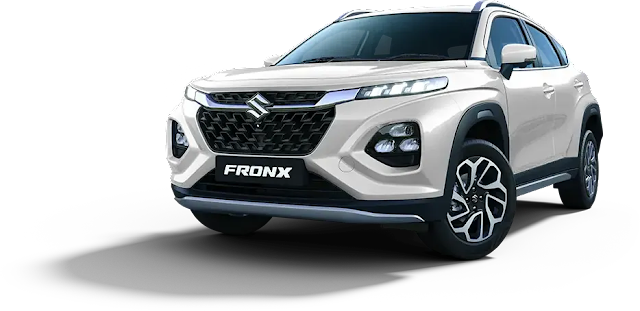
| Maruti Suzuki Fronx | 190mm |
| Hyundai Exter | ~185mm |
| Tata Tiago (Hatchback) | 170mm |
Analysis: While the Nissan Magnite offers a slightly higher 205 mm clearance, the Punch sits comfortably at 193 mm, placing it among the top tier in its class. Crucially, it offers a 5-star Global NCAP safety rating alongside this clearance, which is a combination rarely found in this price point.
Conclusion
The Tata Punch proves that you do not need a massive vehicle to get authentic SUV capabilities. With an impressive 193 mm ground clearance, combined with class-leading safety (5-Star Global NCAP) and compact dimensions (3827mm length), the Punch is arguably the most practical urban warrior on the market. Whether you are navigating pot-holed lanes during monsoon or cruising over rural speed bumps. You can read full review on tata punch review by click here.