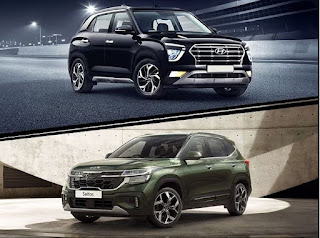
Introduction –
The Kia Seltos is the model that established Kia in India. Back in 2019, it was clear that Kia went all out with the Seltos to win over Indian buyers who were unfamiliar with the brand. Over the years, the Seltos has had a very strong innings. But now, heading into 2026, the all-new second generation is here. The question on everyone’s mind: can it repeat the magic?

Its rivals list is formidable — the Tata Sierra, Hyundai Creta, Volkswagen Taigun, Skoda Kushaq, Maruti Grand Vitara, Maruti Invicto, ToyotaHyryder, MG Astor, and Honda Elevate all compete in this hotly contested midsize SUV segment.
Seltos New Platform & Bigger Proportions –
The second-gen Kia Seltos is underpinned by an entirely new platform — the K3, as Kia calls it. With it comes the promise of enhanced safety, improved comfort, and upgraded technology. But the very first thing that strikes you when you see the new Seltos is its sheer size. It has grown significantly.
The new Seltos is 95 mm longer in overall length, with 80 mm of that growth concentrated in the wheelbase alone. In terms of wheelbase, the Seltos now sits second only to the Tata Sierra among traditional rivals — and it is the longest car overall in this segment. Its overall length has, in fact, crept closer to the next segment of SUVs, like the Tata Harrier. It is also 30 mm wider.
Seltos Exterior Design –
The new Seltos looks more substantial than the model it replaces, though this bold new design may not have the same universal appeal as the old one. The front end features a split headlight arrangement with vertically oriented DRLs at the edges and a square main unit set within a vast grille that spans the full width of the front bumper. The grille sports a gloss finish, but the large openings give an unfortunate view of the radiator sitting far behind.
There is more gloss finish on the lower section of the bumper, with body-coloured enclosures for the LED fog lamps. It is perhaps a busy front end, but the Seltos genuinely looks far better in person than it does in photographs. At the sides, flared-out elements over the wheel arches add volume to the design, paired with gloss-finish wheel arch cladding — a trend seen on many newer SUVs, though its long-term durability remains to be seen.
GT Line versions, like our test car, ride on 18-inch alloy wheels with a geometric pattern. The flush-fitting door handles are a highlight — they feature proximity sensors, so they pop out automatically as you approach the car, which is especially handy in the dark. Roof rails are present but are non-functional. At the rear, a pronounced spoiler neatly hides the rear wash-and-wipe mechanism. Vertically oriented tail lamps and a full-width light bar (though the centre section does not illuminate) give the tail end a modern look. The exhaust tips are hidden.
Seltos Boot Space –
Boot capacity has grown from 433 litres on the original Seltos to 447 litres. While this is an improvement, it should have been considerably larger given how much the car has grown in overall size. The boot is deep, but the space between the seat top and the roof is limited, and the loading lip is rather high. The rear seat splits 60/40 and folds reasonably flat. Kia has thoughtfully included a full-size spare tyre.
Seltos Interior & Technology –Seltos Interior & Technology –
Step inside and it feels unmistakably like a new-age Kia interior — well laid out and giving prime real estate to the screens. The GT Line test car features a dual-tone interior with light materials up top and a darker theme lower down. The dashboard is predominantly finished in grey. While there are only a few genuinely soft-touch surfaces, it does not feel plasticky thanks to thoughtful textures and excellent panel fit.
Ambient lighting stretches from the doors to the dashboard and looks genuinely striking after dark, with a wide range of colours to choose from.
Seltos Screens & Connectivity –
The 12.3-inch touchscreen is crisp, responsive, and well-organised. Wireless Android Auto and Apple CarPlay are now standard — something that was conspicuously absent on high-specification variants of the previous-generation Seltos. The system supports over-the-air software updates and remote diagnostics. Physical shortcut buttons positioned just below the screen are a practical addition that drivers will appreciate.
The 12.3-inch digital instrument cluster is equally crisp and packs in blind-view monitors — cameras relaying a live feed from the wing mirrors directly onto the dials whenever an indicator is activated. This is a genuinely useful safety feature for India’s unpredictable traffic. A 5-inch centre screen for the climate control system technically gives the Seltos a three-screen layout, though since physical controls handle the same functions, it feels somewhat redundant.
Seltos Comfort, Seating & Features –
Seltos Front Seats –
Front seat comfort is reasonable for average-sized adults, though those of a larger frame may find the seats slightly narrow in terms of side bolstering and shoulder support. The seats are well-padded with a neat mesh headrest finish and a ventilation function — essential in Indian conditions. A driver’s seat memory function makes its debut on the Seltos, remembering both seat and mirror positions. A welcome gesture function rolls the seat back when the door is opened for easy entry and exit. Disappointingly, the front passenger seat remains fully manual.
Seltos Rear Seats –
The extra 80 mm in wheelbase has been put to excellent use. Knee room in the rear is genuinely generous — even for someone just under 6 feet with the front seat set to their driving position. Cabin width is more than adequate for three adults, though it is not class-leading (the Tata Sierra edges ahead here). Headroom is just about acceptable for taller passengers, with the panoramic sunroof eating into headspace — a common trade-off.
Rear seat cushioning is soft but the squab is short, leaving thighs without adequate support. The lumbar area feels slightly over-cushioned. Rear seats recline to two stages. Standard rear features include adjustable headrests, three-point seatbelts for all positions, rear sun blinds, AC vents, USB Type-C chargers mounted on the front seatbacks, a fold-down armrest with cup holders, and large door bottle holders.
Seltos Notable Omissions –
A few features from the old Seltos are absent from the new car, which is surprising:
- Onboard air purifier — was present on the outgoing model
- Head-up display — featured on the previous Seltos
- Rear seat ventilation — available on the cheaper Kia Sonet
- Boss mode — front seat adjustment from rear was expected given the segment
- Powered tailgate — the tailgate remains manual
Seltos Engines & Gearboxes –
Mechanically, the new Seltos carries over the same engine lineup from the previous generation. The only change under the bonnet is the addition of gas struts for the opening mechanism. Three powertrain options are available:
| Engine | Power | Gearbox Options | Best For |
| 1.5L NA Petrol | 115 hp | 6-speed MT / CVT (IVT) | City driving |
| 1.5L Turbo Petrol | 160 hp | 7-speed DCT / 6-speed IMT | Highway / enthusiasts |
| 1.5L Turbo Diesel | 116 hp / 250 Nm | 6-speed MT / 6-speed AT | Long-distance / mileage |
Note: Strong hybrid variants are expected to join the lineup, but not before 2027. The Seltos for India remains front-wheel drive only; all-wheel drive is available in international markets.
Seltos Performance: On the Road –
Seltos Turbo Petrol + 7-Speed DCT –
The 160 hp 1.5-litre turbo petrol engine is a joint class best alongside the Hyundai Creta and new Tata Sierra. What makes this engine special is how it delivers its power — not in a sudden mid-range spike as you would get from a Volkswagen Group 1.5 TSI, but in a strong, sustained, and beautifully linear manner. It is deceptively quick and rewards an enthusiastic driver with a satisfyingly throaty — if slightly muted — exhaust note.
The 7-speed DCT is a willing partner, readily dropping two or three gears when you need a burst of performance. Drive modes alter the experience, though the changes between Eco, Normal, and Sport are not dramatic — Sport mode makes the most meaningful difference to throttle response and gearshift sharpness. Paddle shifters are available. Initial impressions suggest the DCT is smoother at low city speeds than on older Seltos variants, though a thorough bumper-to-bumper traffic test would confirm this definitively.
Seltos Diesel + Torque Converter Automatic –
The diesel’s character is best described as relaxed. Power arrives in a friendly, linear manner that is perfectly suited to unhurried, long-distance driving. However, the strong mid-range surge that makes turbo diesels thrilling is largely absent here. Push hard for a quick overtake and the engine groans noticeably — never offensively loud, but unmistakably diesel. There is a persistent feeling that the engine’s output hasn’t kept pace with the car’s grown size.
The 6-speed torque converter automatic largely compensates for the engine’s limitations. It is smooth, quick to shift, and the pairing of engine and gearbox works genuinely well when left in automatic mode. Paddle shifters are available but unnecessary — this combination is best enjoyed when left to its own devices.
Ride Quality & Handling –
Ride quality is one of the most significant areas of improvement on the new Seltos. Owners of the previous generation will recall an unmistakable firmness, particularly at lower speeds. Kia has addressed this comprehensively — bump absorption is noticeably better, and road imperfections no longer translate harshly into the cabin. To put this in context: the reviewer uses a top-spec Hyundai Creta as a daily driver — also riding on 18-inch wheels — and confirms that ride quality on the new Seltos is significantly superior.
Unladen ground clearance is expected to be around 190 mm — sufficient for Indian road conditions. Handling is composed and reassuring; the Seltos changes direction diligently with well-controlled body roll. An impressive quality of the suspension is how well it is damped — there are no secondary movements after hitting a bump, which means the car remains unruffled even when a pothole is encountered mid-corner. Road and wind noise are well contained. There is a slight difference in ride comfort between the petrol and diesel — the diesel feels marginally firmer, though still a marked improvement over the outgoing model.
Seltos Safety & ADAS –
The Seltos complies with all current safety regulations and comes with a comprehensive standard safety equipment list. All variants get six airbags, disc brakes on all four wheels, ABS, electronic stability control, hill start assist, tyre pressure monitoring, ISOFIX child seat mounts, three-point seatbelts for all occupants, and a reverse camera with rear parking sensors. Higher trims add front and side parking sensors, a 360-degree camera, and ADAS Level 2 functions. The ADAS suite is impressively well-calibrated. Adaptive cruise control and lane-keep assist performed reliably on highway driving outside Bengaluru. The system reads traffic conditions naturally — braking is gradual and never panicky, making it genuinely trustworthy. The lane-keep assist provides predictable, smooth corrections without the overcorrection seen in many competitors. Rear cross-traffic alert will warn of approaching vehicles and can bring the car to a stop if the driver does not.
react. The blind-view monitors on the instrument cluster are among the most practically useful features on the car.
No NCAP or Bharat NCAP crash test ratings have been announced at the time of this review.
Seltos Pricing & Variants –
Kia announced prices for the new Seltos on 2 January 2026. With 40 variants covering all engine, gearbox, and trim combinations, the range is expected to start at approximately ₹11 lakh (ex-showroom) and extend to around ₹20 lakh for top-spec X-Line variants.
Seltos Verdict –
To be honest, the second-generation Kia Seltos is not as revolutionary as the original was at its 2019 launch. Yes, it is larger and the ride quality is dramatically improved — but in most other areas, it feels similar to, or only incrementally better than, its predecessor. A more powerful diesel engine and a few more standout features would have elevated it further.
Then again, that is no bad thing — because the original Seltos was already an excellent all-rounder with most bases covered. The new Seltos builds confidently on a winning formula. It is larger, more comfortable to ride in, better equipped, and more technologically advanced. For anyone shopping in the midsize SUV segment, the 2026 Kia Seltos remains a thoroughly compelling proposition.
Seltos Quick Ratings Summary –
| Category | Rating |
| Exterior Design | ★★★★☆ — Bold but polarising |
| Interior Quality | ★★★★☆ — Well-built, good screens |
| Rear Space | ★★★★★ — Excellent improvement |
| Boot Space | ★★★☆☆ — Adequate, not exceptional |
| Turbo Petrol Engine | ★★★★★ — Smooth, quick, refined |
| Diesel Engine | ★★★☆☆ — Relaxed but lacks punch |
| Ride Quality | ★★★★★ — Major upgrade over old model |
| Handling | ★★★★☆ — Composed and confident |
| Technology & ADAS | ★★★★★ — Best-in-class calibration |
| Value for Money | ★★★★☆ — Competitive pricing |